
Hong Zhu Hong Zhu

AutoOps for Elastic Cluster

Elastic has announced on Feb 25 that Elastic AutoOps is now free for all.

https://www.elastic.co/blog/autoops-free

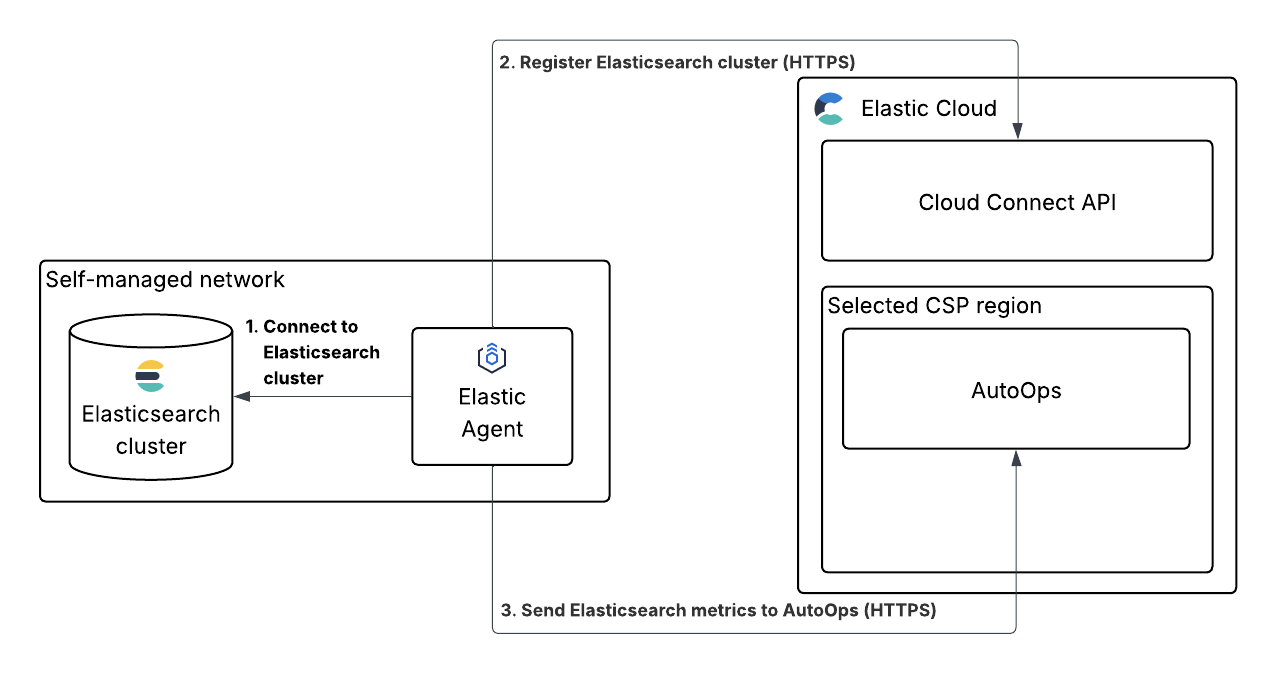
Elastic AutoOps is a SaaS service Elastic provides that helps you to gain critical insight for your cluster operation. It collects the operational metadata (Node stats, cluster settings and shard states etc) and ship to AutoOps Service on Elastic Cloud for analytics and operational dashboards.

What it means for Elastic users and administrator teams?

Elastic has announced on Feb 25 that Elastic AutoOps is now free for all.

https://www.elastic.co/search-labs/blog/elastic-autoops-free-for-self-managed-elasticsearch


Elastic AutoOps is a SaaS service Elastic provides that helps you to gain critical insight for your cluster operation. It collects the operational metadata (Node stats, cluster settings and shard states etc) and ship to AutoOps Service on Elastic Cloud for analytics and operational dashboards.

This means that Elastic Cloud provides a free cloud service to monitor your cluster. (It does not collect your payload data in the cluster, only meta data for cluster operations)


For those that utilize this free service, it could reduce the operational overhead for managing ELK cluster significantly as Elastic provides best practice AI driven monitoring framework of your cluster, it also provides you recommendations for mitigations.

A screen shot from the Elastic AutoOps intro.

Well, we all know from our life experiences that "free" product and services if often not so "free" in the other aspects. This is a service that costs computing power and maintenance, but I guess this provides Elastic as a product vendor the critical insight of how customers are using their products and key insights of what is right and what is wrong with the product implementation out in the field. Of course this insight is worth a lot for product development and commercial reasons.


For users and administrators of ELK cluster, the pros and cons are obvious:

Pros:

  • No need to reinvent the wheel and build up up-to-date routines, tooling setups for monitoring of the cluster when the best-in-class tool is free to use

  • Reduce lead time for troubleshooting significantly with the support of AI engines online at Elastic Cloud

  • No longer rely on key person or competence to manage the cluster operation on a day-to-day basis

  • Developers, SRE and IT security analysts that are heavy users of the ELK stack will be able to have a real time view of how the cluster is working in real-time if they hit any performance issue or need to troubleshoot

Cons:

  • You need to submit the cluster metadata to Elastic Cloud through the AutoOps agent

  • Monitoring of the cluster becomes more of a black-box and you just consume the data (it may not be a con as end-users are more interested of the outcome from Elastic solutions than the cluster itself)

How does this AutoOps agent work? (source Elastic doc)
Impact of this for organizations and teams using Elastic stack for search, observability and security:

  • You probably no longer need as many ELK cluster operational resources as ealier when this monitoring was sole an in-house action

  • Users of Elastic stack will have transparency of how the cluster is working right now, which significantly reduce their troubleshooting time when they hit issues

  • It becomes easier to further develop and expand the cluster as shortcomings of the current environment becomes much clear through the insightful data in AutoOps

  • The question we need to ask is what we will do when this feature will be charged, the cost of savings in reduced number of human monitoring resources may justify a price tag


Before the cloud age, vendors would probably sell a tool or function like AutoOps as an additional feature with license fee. Now Elastic chooses to provide this as a free service in the Cloud. For smaller organizations, it is a no brainer and many probably is already running on serverless. For others this provides an opportunity to move the cost from maintenance resources to more AI driven automation and operation in future. This is happening anyway with the rapid expansion of Agentic AI.

Read More
Hong Zhu Hong Zhu

Obserability in the Agentic AI era

Langchain published on Feb 21:st a very insightful and structured paper about Agent observability in the Agentic AI era which is taking the industry with storm.

https://blog.langchain.com/agent-observability-powers-agent-evaluation/

If we think it is a challenge migrating monitoring to observability for the microservices and kubernetes containers, degree of difficulties and challenge grow hundred times in the Agentic AI  due to the following changed behavior of software:

  • Testing and verification appears only at run-time, traditional tests are obsolete

  • Number of code lines to trace and debug grow to astronomical level

  • Indeterministic nature of the LLM reasoning outcome

  • The interaction model between the AI agents

Langchain published on Feb 21:st a very insightful and structured paper about Agent observability in the Agentic AI era which is taking the industry with storm.

https://blog.langchain.com/agent-observability-powers-agent-evaluation/


Here are some short summaries of the content:

  • New challenges compare with traditional software debugging

    • From debugging code to debugging reasoning

  • Change of testing methodology for software when agent behavior emerges only at runtime

  • Major observability components like runs, traces and threads in agent calls

  • Growth of tracing data will be gigantic for debugging purposes

  • Mitigations:

    • Single-step evaluation

    • Full-turn evaluation

    • Multi-turn evaluation

  • Other evaluation concepts

    • Offline evaluation

    • Online evaluation

    • Ad-hoc evaluation

  • An example of troubleshooting workflow for Agents:

    1. User reports incorrect behavior

    1. Find the production trace

    2. Extract the state at the failure point

    3. Create a test case from that exact state

    4. Fix and validate


On the blog page there are as well a number of case studies of using Langsmith for Agent Observability troubleshooting. As this is so new and fresh, most of the tooling vendors are yet catching up frenetically in this area.

https://blog.langchain.com/tag/case-studies/


I asked Claude to provide me with a summary of the AI agent observability field, and below are the summary table that Claude has provided based on the evaluation concepts that Langchain provided in the blogpost.


My take away:

If we think it is a challenge migrating monitoring to observability for the microservices and kubernetes containers, degree of difficulties and challenge grow hundred times in the Agentic AI  due to the following changed behavior of software:

  • Testing and verification appears only at run-time, traditional tests are obsolete

  • Number of code lines to trace and debug grow to astronomical level

  • Non-deterministic nature of the LLM reasoning outcome

  • The interaction model between the AI agents


We are at the dawn of a new era with a lot of doors of opportunity open for innovation and new technology. Thanks to the fact that we have smarter AI LLM and tools now, those observability challenges with huge datasets and iterative testing cycles is just what AI is good at.

Read More
Hong Zhu Hong Zhu

Vendor Capability Comparison for Agent Observability

Summarized by Claude

The three IT observability incumbents (Dynatrace, Elastic, Splunk/Cisco) are all moving fast, but their approaches reflect their heritage.

The notable difference vs. purpose-built tools like LangSmith and Arize: the incumbents excel at correlating agent behavior with the full application/infrastructure stack, but LangSmith remains the only platform where Runs, Traces, and Threads are truly first-class primitives — particularly for building evaluation datasets directly from production traces, which is the most critical workflow the blog post describes.

Agent Observability Vendor Comparison

Agent Observability: Vendor Capability Comparison

Mapping IT observability vendor solutions to the LangChain framework for agent observability — Runs · Traces · Threads · Evaluation

Generally Available (GA)
Preview / Alpha / Beta
On Roadmap / Announced
Not yet available / Partner-dependent
Observability Area
(LangChain Framework)
🔵 Dynatrace
Grail + Davis AI + DT Intelligence
🟡 Elastic
Elastic Observability + EDOT
🟠 Splunk / Cisco
Observability Cloud + AppDynamics
🟣 Datadog
LLM Observability
🟢 New Relic
AI Monitoring
🔴 LangSmith
(LangChain) — Purpose-built
⚪ Arize AI
Phoenix + AX
PRIMITIVE 1: RUNS — Capturing individual LLM execution steps (inputs, outputs, tool choices at each step)
Single LLM Call Tracing
Input/output capture per call
GA
  • Full prompt/response logging via OpenLLMetry & OTel GenAI conventions
  • Token usage, latency, error capture per call
  • Grail data lakehouse stores all call data
GA
  • OTLP tracing via EDOT (Python, Java, Node.js)
  • Integrates LangTrace, OpenLIT, OpenLLMetry
  • Captures model used, duration, errors, tokens, prompt/response
GA
  • LLM service traces via Splunk APM with OTel
  • AI Interactions tab in trace view
  • AI Events tab for parsed LLM response quality logs
GA
  • Auto-instruments OpenAI, LangChain, Bedrock, Anthropic
  • Latency, token usage, error capture without code changes
  • Correlated alongside APM data
GA
  • AI Monitoring with auto-instrumentation for Python & Node.js
  • Correlates LLM call data with backend service traces
GA
  • Core primitive — "Run" is native concept
  • Captures full prompt context, tool availability, and decision state per step
  • Enables single-step isolation for debugging
GA
  • LLM call tracing with embedding-level visibility
  • Drift detection on LLM output distributions
  • Arize Phoenix: OTel-native, open-source option
Tool Call Visibility
Which tools the agent invoked, with what arguments
GA
  • Tool invocations tracked via agentic framework instrumentation
  • Supports MCP protocol monitoring
  • A2A (agent-to-agent) communication tracing
GA
  • LangChain tool call tracing via EDOT
  • Agentic workflow tracing captures tool interactions
GA
  • Tool call spans with runtime & memory details
  • Execution paths for agent workflows in AI Agent Monitoring
GA
  • Tool call tracing integrated with LLM spans
  • Evaluates tool selection quality
Preview
  • Agent Monitoring release targets multi-agent tool visibility
  • Tool invocation data within trace view
GA
  • Every tool call captured with arguments, results, timing
  • Used natively in single-step evaluations
GA
  • Tool selection quality as a scored evaluation metric
  • Arize AX tracks tool usage patterns
Cost & Token Monitoring
Token usage, cost-per-request tracking
GA
  • Token usage, service fees, resource cost monitoring
  • Intelligent detection for cost spikes and usage changes
  • A/B model comparison for cost decisions
GA
  • Pre-built dashboards: total invocations & tokens per model/endpoint
  • PTU (provisioned throughput units) tracking
  • Billing cost visualization for Azure OpenAI, Bedrock
GA
  • Token consumption & request volume in AI Agent Monitoring dashboard
  • AI Infrastructure Monitoring for GPU/compute cost
  • LLM cost management aligned to business goals
GA
  • Per-request token cost tracking and aggregation
  • Cost dashboards correlated to model/deployment version
GA
  • Token and cost tracking in AI Monitoring
  • Cost metrics tied to model and workload type
GA
  • Token usage and latency per run and trace
  • Cost aggregated per thread/dataset
GA
  • Token cost monitoring with model comparison
  • Cost-per-query tracking for production agents
PRIMITIVE 2: TRACES — Capturing full agent execution trajectories (all steps, tool calls, nested structure)
End-to-End Agent Trace
Multi-step trajectory from input to final output
GA
  • End-to-end traces from user request through LLM → orchestration → tools
  • Nested structure across all AI stack layers
  • Supports LangChain, LlamaIndex, Amazon Bedrock, Strands SDK
GA
  • LangChain request tracing with full execution path
  • APM trace view with dependency mapping
  • Covers frontend → backend → LLM chain
GA
  • Agent Conversations & AI Trace Views (Alpha → GA Q1 2026)
  • Trace view: span details, tool call runtime, agent workflow paths
  • Integrated APM + AI Agent Monitoring for full-stack trace
GA
  • LLM traces alongside existing APM data
  • Google ADK integration for agent trace visualization
  • Trace correlates LLM calls with DB queries and infra metrics
GA
  • 2025 Agentic AI Monitoring: multi-agent systems visibility
  • Full-stack trace correlating AI calls with infra
GA
  • Native "Trace" primitive — complete multi-step agent execution
  • Nested run structure with parent-child relationships
  • Can handle 100MB+ traces for long-horizon agents
GA
  • End-to-end LLM + agent tracing via Arize Phoenix (OTel-based)
  • Trace visualization with step-by-step breakdown
Topology & Dependency Mapping
How agents, tools, and services relate to each other
GA
  • Smartscape real-time dependency graph includes AI agent nodes
  • Agentic Topology View (roadmap: Smartscape-grade for agent flows)
  • Maps agent-to-agent, agent-to-tool, agent-to-service relationships
GA
  • APM service map includes AI/LLM services
  • Dependency isolation for bottleneck detection
GA
  • Enhanced flowmaps for AI agent topology
  • Service-to-AI dependency visualization in AppDynamics
GA
  • Agent service maps within LLM Observability
  • Google ADK integration maps agent decision graphs
Preview
  • Service maps extended to show interconnected agent relationships
GA
  • Trace hierarchy shows nested agent/tool relationships
  • Thread view groups traces by session
GA
  • Visual trace explorer with agent flow graphs
  • Embedding cluster maps for semantic drift
RAG / Retrieval Observability
Vector DB, retrieval quality, context grounding
GA
  • Vector DB monitoring: Milvus, Weaviate, Chroma
  • Semantic cache tracking
  • RAG pipeline instrumentation via LangChain/LlamaIndex
GA
  • Integrates with RAG orchestration frameworks
  • Prompt/response logging for hallucination detection
  • Document transparency in context dashboards
GA
  • Vector DB dashboards: Milvus, Pinecone in AI Infra Monitoring
  • Document reliability classification (green/yellow/red)
  • Retrieval-to-generation trace for RAG pipelines
GA
  • LangChain + LlamaIndex auto-instrumentation for RAG
  • Context relevance and groundedness as evaluation metrics
GA
  • LLM Monitoring includes retrieval pipeline tracing
  • RAG context and source tracking in AI Monitoring
GA
  • Full LangChain/LangGraph instrumentation includes retrieval steps
  • Each retrieval documented as a child run within trace
GA
  • TruLens integration for RAG-specific metrics
  • Context relevance, groundedness, answer relevance scoring
  • Hallucination detection purpose-built
Guardrails & Safety Monitoring
Content filtering, prompt injection, policy compliance
GA
  • Guardrail metrics monitoring for bias, errors, misuse
  • Compliance monitoring with full data lineage
  • Audit trail for all inputs/outputs
GA
  • Amazon Bedrock Guardrails integration
  • Azure OpenAI content filter monitoring
  • PII/sensitive data leak detection via AI Assistant
  • Prompt injection detection
GA
  • Cisco AI Defense integration: prompt injection, PII leakage, hallucination detection, policy violations
  • LLM risk, misuse, drift, leakage mitigation
GA
  • Built-in hallucination & failed response detection
  • Security scanners for prompt injection & data leaks
Preview
  • Safety metrics within AI Monitoring
  • Partner-dependent guardrails integration
GA
  • Online evaluators can run guardrail checks on every trace
  • Reference-free evaluations for safety scoring in production
GA
  • Real-time guardrail interception via Luna-2 evaluators (Galileo, integrated)
  • PII and policy violation blocking before execution
PRIMITIVE 3: THREADS — Multi-turn conversation context across sessions (state evolution, context accumulation)
Multi-Turn Session Tracking
Grouping traces into conversational threads
GA
  • Session-level context preserved across agent executions
  • Grail stores time-series session state across turns
GA
  • Multi-turn LangChain session tracing
  • Thread-level conversation logs in Elasticsearch
Preview (Alpha)
  • Agent Conversations view groups multi-turn interactions
  • Business journey mapping across agent sessions
GA
  • Session replay for multi-turn conversation debugging
  • LLM trace correlations across turns
Preview
  • Multi-agent system visibility includes session grouping
  • SRE Agent includes incident conversation context
GA
  • Native "Thread" primitive — groups multiple traces into sessions
  • Multi-turn evaluation validates context persistence across turns
  • State evolution tracking turn-by-turn
GA
  • Thread-level conversation tracing in Arize AX
  • Context drift detection across turns
State & Memory Tracking
How agent memory and artifacts change across turns
GA
  • Agent state captured via Grail unified lakehouse
  • Continuous context mapping via Smartscape
Preview
  • State stored in Elasticsearch; query-able across sessions
  • No dedicated agent memory diff view yet
Preview
  • Agent state changes tracked within conversation view
  • AppDynamics: business journey mapping captures state context
Preview
  • State changes viewable through trace spans
  • LLM Experiments for testing prompt/state changes against production
Roadmap
  • Announced as part of AI agent monitoring expansion
GA
  • State changes (file writes, memory updates) tracked as part of full-turn evaluation
  • Artifacts and memory files inspectable per thread turn
GA
  • Session state monitoring and semantic memory drift detection
EVALUATION — Assessing agent quality: single-step, full-turn, multi-turn; offline, online, and ad-hoc
Single-Step Evaluation
Did the agent make the right decision at a specific step?
GA
  • Regression tests per model call
  • LLM-as-judge scoring integrated (planned: full prompt lifecycle)
  • Step-level anomaly detection via Davis AI
GA
  • LLM response evaluation via AI Assist
  • Prompt/response sampling for quality review
Preview
  • Quality Evaluations (Alpha in Observability Cloud)
  • AGNTCY Metric Compute Engine: relevance, hallucination scoring per step
  • LLM-as-judge evaluators in AI Agent Monitoring
GA
  • Built-in hallucination & quality evaluations per trace span
  • Tool selection quality as metric
  • LLM Experiments tests prompt changes vs. production
Preview
  • Business impact analysis for AI app decisions
  • AI Monitoring includes decision quality tracking
GA
  • Core single-step eval workflow: set state → run one step → assert decision
  • Production run states extractable as offline test cases
GA
  • Per-call scoring with custom LLM-as-judge or human feedback
  • Evaluations on runs with built-in metrics (correctness, relevance)
Full-Turn (Trajectory) Evaluation
Did the agent execute the full task correctly end-to-end?
GA
  • End-to-end trace evaluation via Davis causal analysis
  • Trajectory anomaly detection (tool call sequences)
  • A/B model comparisons for trajectory efficiency
GA
  • APM trace-level analysis of LangChain agent flows
  • Error and bottleneck identification across full trajectory
GA
  • Agent Scorecard (Alpha) for end-to-end performance
  • Trajectory checks via AI Agent Monitoring dashboards
  • Error rate + performance tracking across full runs
GA
  • Full trace evaluation with latency, error, and quality scoring
  • LLM Experiments for offline trajectory testing
GA
  • Agentic AI Monitoring with end-to-end flow assessment
  • Business impact analysis per agent execution
GA
  • Full-turn evaluation on traces: trajectory, final response, state change assertions
  • Easiest granularity to build evaluations against
GA
  • Trace-level scoring with hallucination, context adherence, tool selection
  • Dataset-based offline evaluation workflows
Multi-Turn Evaluation
Does the agent maintain context correctly over a full session?
Preview
  • Agentic Topology View (roadmap) targets multi-turn context visualization
  • Davis AI correlates anomalies spanning multiple interactions
Preview
  • Multi-turn session logs queryable via Elasticsearch
  • No native automated multi-turn eval framework yet
Preview (Alpha)
  • Agent Conversations view supports multi-turn context review
  • AGNTCY metrics propagate across multi-turn sessions
Preview
  • Session replay enables multi-turn inspection
  • Cross-turn correlation in LLM Observability
Roadmap
  • Announced multi-agent & session-based monitoring expansion
GA
  • Native "Thread" evaluation validates context persistence across turns
  • Conditional eval logic per turn to keep tests on-rails
GA
  • Thread-level semantic drift detection
  • Multi-turn session evaluations with per-turn scoring
Online (Production) Evaluation
Continuous quality checks on live agent traffic
GA
  • Davis AI continuously evaluates production behavior
  • Intelligent anomaly detection on every trace ingested
  • Real-time cost, latency, and quality alerting
GA
  • Real-time dashboards for prompt/response quality
  • Guardrail alerting on production traffic
  • Anomaly detection via Elastic ML
GA
  • AGNTCY quality metrics as streaming telemetry
  • Real-time prompt injection, drift, PII leakage alerts via Cisco AI Defense
  • AI Troubleshooting Agent auto-correlates MELT signals
GA
  • Continuous hallucination & injection detection on all production traces
  • Watchdog AI anomaly detection on LLM metrics
GA
  • Real-time AI workload monitoring with SRE Agent analysis
  • AI Monitoring ingests and scores production traces
GA
  • Online evaluators run as traces are ingested
  • Reference-free evaluators (no ground truth needed)
  • Trajectory flags, efficiency monitoring, quality scoring in production
GA
  • Real-time guardrail scoring with sub-200ms latency (Luna-2)
  • Continuous production monitoring with LLM-as-judge
Offline Evaluation / Datasets
Building test suites from production traces; pre-deployment testing
GA
  • Holdout evaluation sets for model drift comparison
  • Custom regression tests per model version
Preview
  • Evaluation via LangTrace/OpenLIT integrations
  • No native dataset management for offline eval
Preview (Alpha)
  • Quality Evaluations Alpha supports test set creation from traces
  • AppDynamics: compliance-focused offline evaluation
GA
  • LLM Experiments: test prompt changes vs. production baseline
  • Offline evaluation integrated with trace replay
Roadmap
  • No-code agent builder will support offline evaluation flows
GA
  • Production traces → datasets (automated pipeline)
  • Run offline evals on commit or pre-deployment
  • Prompt caching to avoid redundant model calls during eval
GA
  • Dataset management for offline evaluations
  • Experiment tracking (Arize AX) with version comparison
  • Human annotation workflows for ground truth labeling
Ad-Hoc Insights / AI-Assisted Analysis
Querying traces at scale; pattern discovery; LLM-as-judge
GA
  • Davis AI + Dynatrace Intelligence: causal root cause analysis
  • Natural language querying via DQL / notebooks
  • Agentic ops system: deterministic + agentic AI fused reasoning
GA
  • Elastic AI Assistant for anomaly investigation
  • ES|QL queries across trace data at scale
GA
  • AI Troubleshooting Agent: correlates MELT, surfaces root cause, generates remediation plans
  • Splunk MCP Server: query Observability Cloud via AI agents/LLMs
  • Splunk platform for ad-hoc log querying at scale
GA
  • Watchdog AI for pattern discovery across LLM metrics
  • Dashboards + analytics for failure mode identification
GA
  • SRE Agent for conversational incident investigation
  • AI-assisted root cause analysis in observability platform
GA
  • Insights Agent: AI-assisted analysis of large trace datasets
  • Query threads to surface failure patterns, inefficiencies, decision explanations
GA
  • Cluster analysis on embeddings for behavioral pattern discovery
  • Natural language querying on trace data
PLATFORM DIFFERENTIATORS — OTel alignment, framework support, unique strengths
OpenTelemetry & Framework Support GA
  • OTel + OpenLLMetry (20+ AI/Agent frameworks)
  • Amazon Bedrock, Azure AI Foundry, Strands, AgentCore, Vertex AI, OpenAI, Gemini, DeepSeek, NVIDIA NIM, MCP protocol
GA
  • EDOT (Elastic Distributions of OTel) for Python, Java, Node.js
  • Amazon Bedrock, Azure OpenAI, Azure AI Foundry, Google Vertex AI, OpenAI
  • LangTrace, OpenLIT, OpenLLMetry as 3rd-party options
GA
  • Major OTel contributor; AGNTCY donation to Linux Foundation
  • LangChain, OpenAI, AWS Bedrock, GCP VertexAI, NVIDIA NIMs, LiteLLM, Milvus, Pinecone
GA
  • OpenAI, LangChain, AWS Bedrock, Anthropic, LlamaIndex, Google ADK
  • DDTRACE SDK auto-instrumentation
GA
  • OTel-native with Pixie for Kubernetes
  • Python & Node.js LLM auto-instrumentation
  • MCP server integrations via partner agents
GA
  • Purpose-built for LangChain/LangGraph (single env var setup)
  • Supports 50+ frameworks via SDK
  • OTel export for piping into other observability stacks
GA
  • Arize Phoenix: fully OTel-native, open source
  • OpenAI, LangChain, LlamaIndex, Bedrock, CrewAI, AutoGen
  • Interops with Datadog, Honeycomb, Grafana via OpenLLMetry
Key Differentiator / Unique Strength 🔵 Causal AI + Deterministic Agents: Davis AI provides causal root cause analysis grounded in real-time Smartscape topology. Dynatrace Intelligence fuses deterministic + agentic AI for trusted autonomous operations. 12x better problem resolution vs. pure LLM agents. 🟡 Search + Observability + Security Unified: Elastic combines LLM observability, security (SIEM), and search in one platform. Strong OTel ecosystem via EDOT. Leader in 2025 Gartner Magic Quadrant for Observability Platforms. 🟠 Cisco AI Defense + AGNTCY Standards: Unique network/security heritage via Cisco integration enables AI risk detection at infrastructure level. Strong OpenTelemetry contribution and vendor-neutral AGNTCY standard for agent quality metrics. 🟣 Breadth + APM Correlation: LLM traces integrated directly alongside existing APM, infra, and security data. LLM Experiments allows prompt testing pre-deployment. Watchdog AI for continuous anomaly detection. Google ADK first-mover integration. 🟢 Application-Centric Depth + Pricing: Strong APM heritage with code-level diagnostics. Predictable data-ingestion pricing. SRE Agent integrates with ServiceNow, PagerDuty, GitHub for agentic remediation. 30% QoQ growth in AI Monitoring adoption. 🔴 Purpose-Built for Agent Evaluation: Only vendor where Runs, Traces, and Threads are first-class primitives. Production traces automatically become offline test datasets. Deepest LangChain/LangGraph integration. Insights Agent for AI-assisted trace analysis at scale. ML Pedigree + Open Source: Only vendor with traditional ML model monitoring (drift, bias) converging with LLM agent observability. Arize Phoenix is open-source and OTel-native. Strong RAG evaluation with TruLens. Best embedding-level drift detection.

Sources: LangChain Blog (Feb 2026), Dynatrace Docs & Blog (Jan–Feb 2026), Elastic Docs & Observability Labs (2025–2026), Splunk Blog & Docs (Q1 2026), Datadog, New Relic, Arize AI product documentation. Status as of February 2026. Features evolving rapidly — verify current availability with vendors.

Data summarized by Claude on Feb 26,2025

Disclaimer: AI can make mistakes, for deep dive please doublecheck the answers on relevant sources.

Read More